Books That Found Me
Some books you seek out; others seem to seek you. Books That Found Me is a gentle sharing of the writings that have arrived in my life as guides, mirrors, and companions, often just when I needed them most. Each has stirred something deep within me, opening a new way of seeing, feeling, or being. These are not simply books I’ve read; they’re books that have read me, inviting reflection, awakening understanding, and reminding me of who I am beneath all the noise.
Books That Found Me is a collection of writings that have crossed my path at just the right time, each one arriving as a teacher, a mirror, or a reminder, offering wisdom exactly when my soul was ready to hear it.
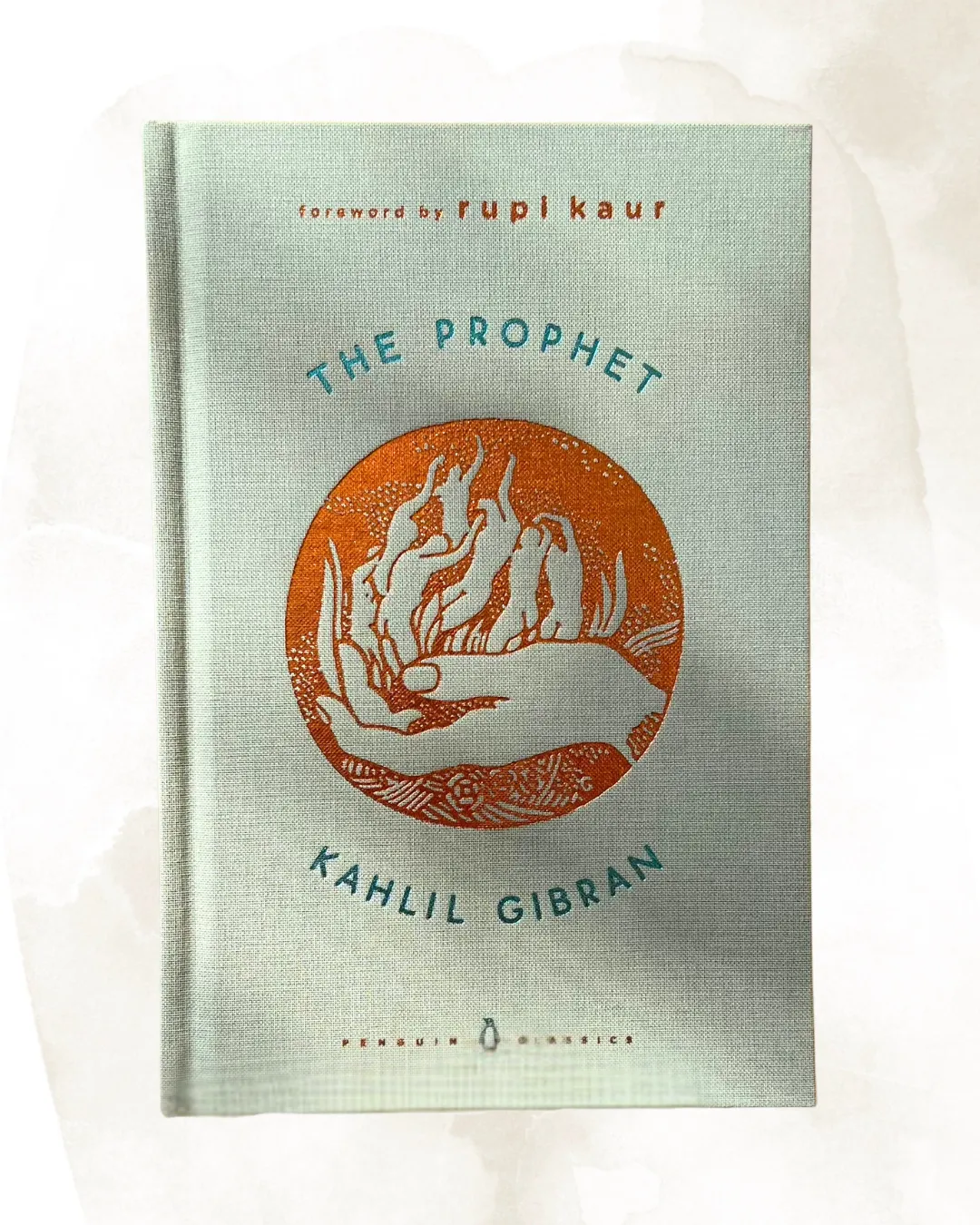
The Prophet by Kahlil Gibran
There are a few books that speak directly to the soul, and The Prophet is one of them. Written in poetic prose, it explores life’s great themes - love, joy, sorrow, work, freedom, and death with timeless wisdom and tenderness. Each chapter feels like a meditation, inviting the reader to see ordinary life as sacred, and to find meaning in both the beauty and the ache of being human.
This book found me at a time when I was questioning purpose and direction, and its words offered quiet guidance, and the simplicity of its truths awakened something deep and meaningful within me.
Each time I return to The Prophet, it feels like meeting an old friend who sees me and speaks straight to my heart.
Perhaps it will find you, also.
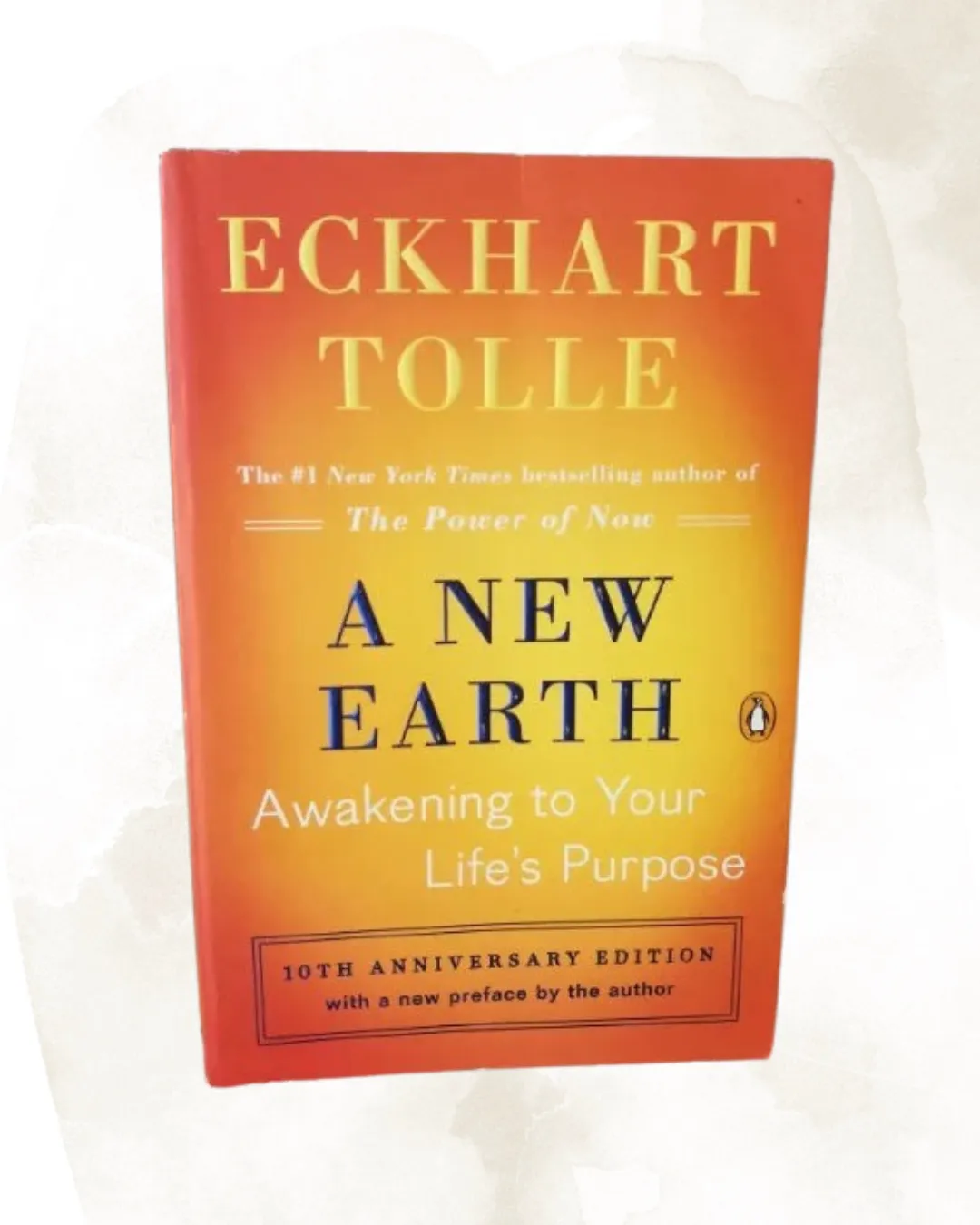
A New Earth by Eckhart Tolle
A New Earth is one of those books that doesn’t just inform, it transforms. It speaks to the part of us that is ready to wake up to a new level of consciousness, to step out of the ego's trance and remember who we truly are beneath the noise of identity and striving.
This book found me at a time when I was living mostly in my head, continually thinking, planning, doing. As I read, something opened, it was as though a light turned on inside me, and I could finally see how much of life I’d been missing by being lost in thought. I was lucky enough to hear Eckhart Tolle speak in the Findhorn Ecovillage in Scotland, and what struck me was his depth of stillness and peace, and the whole room felt like it was breathing as one. It was extraordinary.
A New Earth didn’t just change how I think, it changed how I see things. It continues to remind me that peace isn’t something to chase, it’s what remains when we stop resisting the present moment.
Perhaps it will find you, too
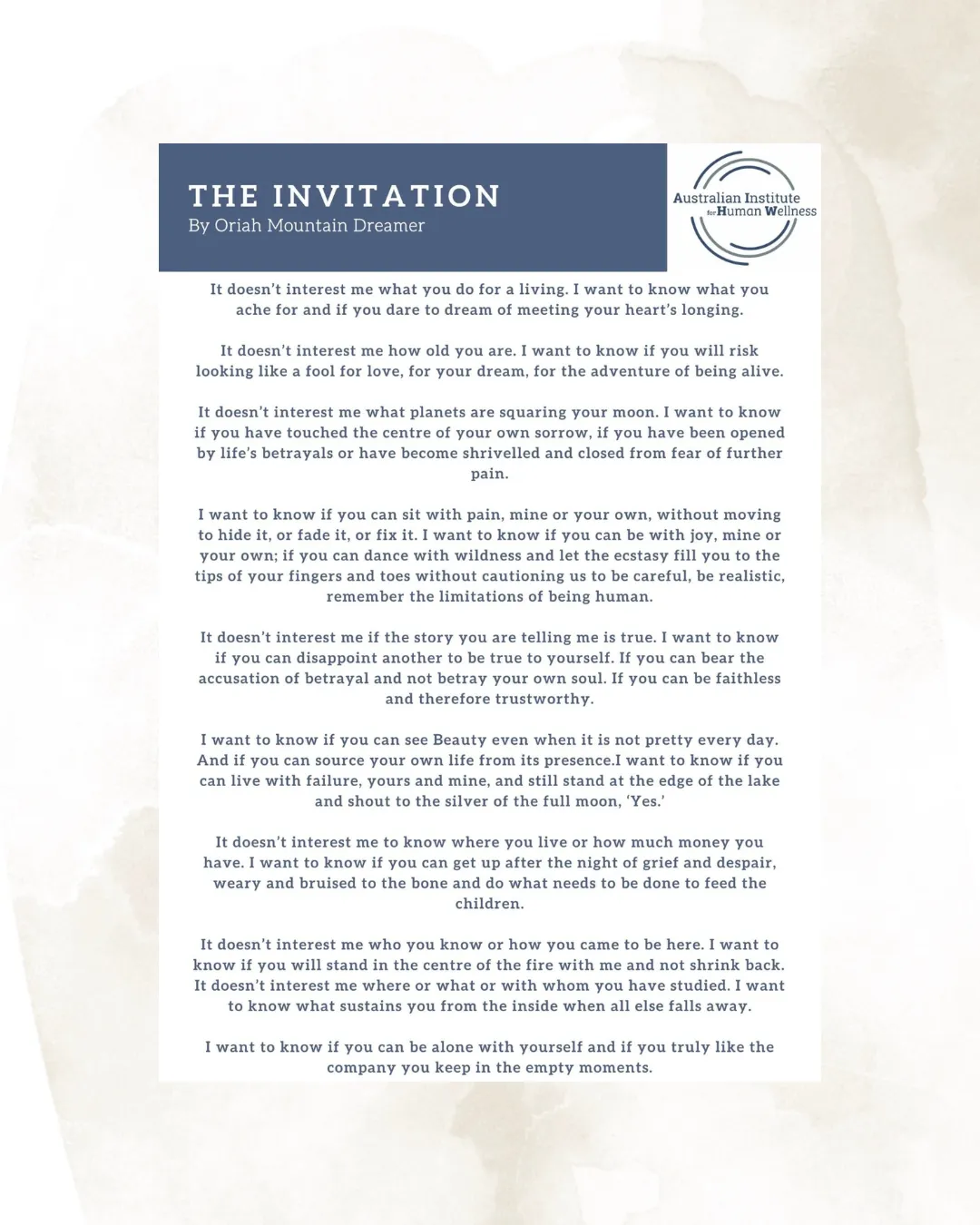
The Invitation by Oriah Mountain Dreamer
The Invitation is a poem that calls straight to the heart. It doesn’t care for your credentials, your success, or the masks you wear. It asks, instead, the real questions: Can you sit with pain, stand in joy, show up fully, love deeply, and live truthfully?
When this book found me, it was like being called home to what truly matters. It reminded me that life isn’t about what I do, but about how I show up, how much I care, how fully I live, how honestly I love. It stripped away the noise and returned me to the essence of being human, present, imperfect, and real.
This book continues to be a compass when I lose my way, whispering that authenticity is not a destination but a daily practice of choosing to be who I am.
Perhaps it will find you, too.
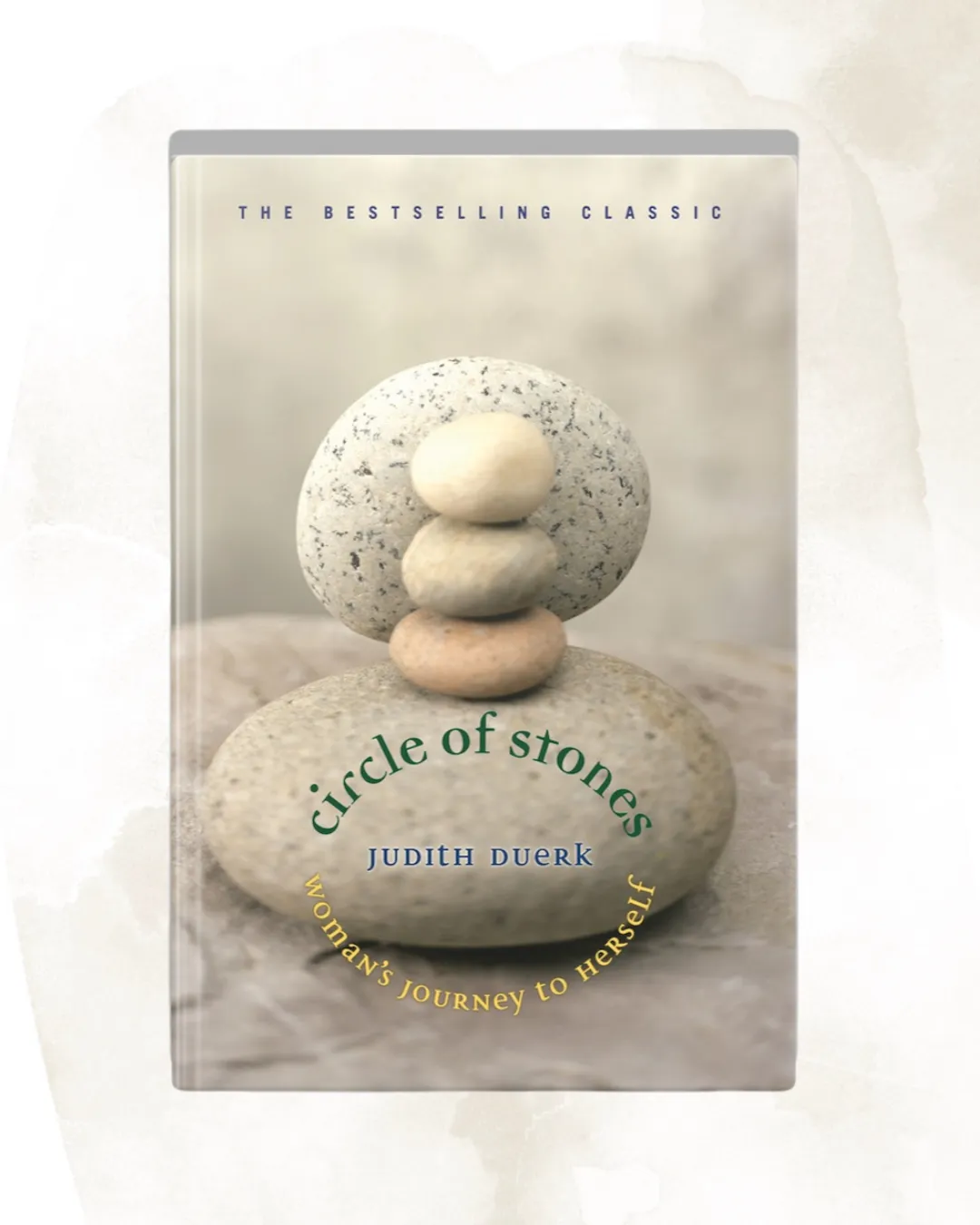
Circle of Stones by Judith Duerk
The Invitation is a poem that calls straight to the heart. It doesn’t care for your credentials, your success, or the masks you wear. It asks, instead, the real questions: Can you sit with pain, stand in joy, show up fully, love deeply, and live truthfully?
When this book found me, it was like being called home to what truly matters. It reminded me that life isn’t about what I do, but about how I show up, how much I care, how fully I live, how honestly I love. It stripped away the noise and returned me to the essence of being human, present, imperfect, and real.
This book continues to be a compass when I lose my way, whispering that authenticity is not a destination but a daily practice of choosing to be who I am.
Perhaps it will find you, too.
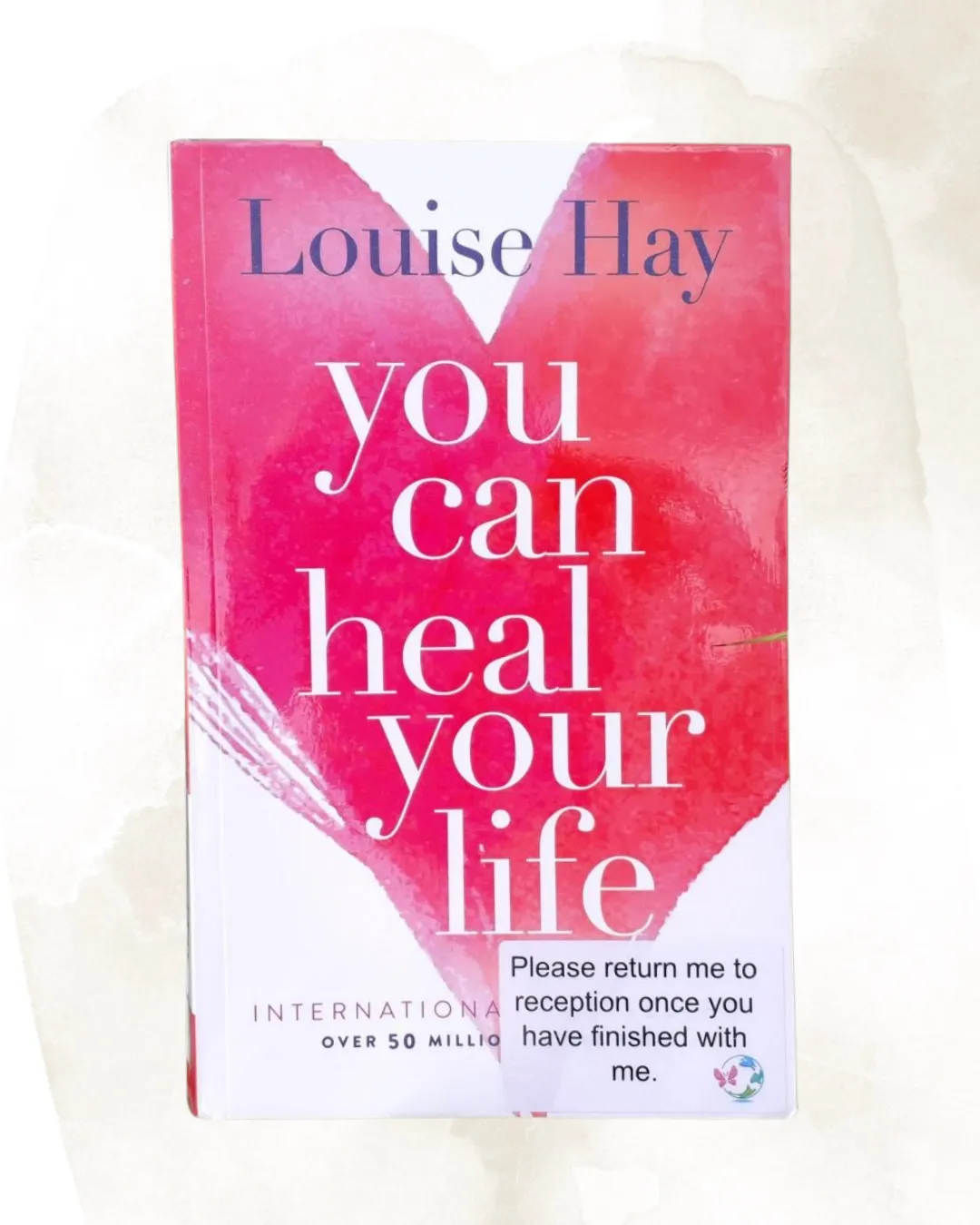
You Can Heal Your Life by Louise Hay
When You Can Heal Your Life found me, I was at one of the lowest points of my life, moving through deep loss, tragedy, and trauma. On the surface, I was holding it all together, but inside, I was crumbling. This book became a lifeline. It spoke to the quiet, broken parts of me that longed for hope, and somehow, it began to bring me back to life.
Louise Hay’s words taught me that healing doesn’t come from pretending we’re fine but from truly loving myself through the pain. Her message, that our thoughts, words, and beliefs can either harm or heal, shifted everything. Slowly, I began to soften, to be gentle with myself, to believe in the possibility of renewal.
Even now, I still reach for this book when life feels heavy. Its pages are a little worn, yet they still remind me that that my mind is powerful and I am the one who directs my mind, it also reminds me that love is the greatest medicine of all, especially the love we extend to ourselves when we need it most.
Perhaps it will find you, too.
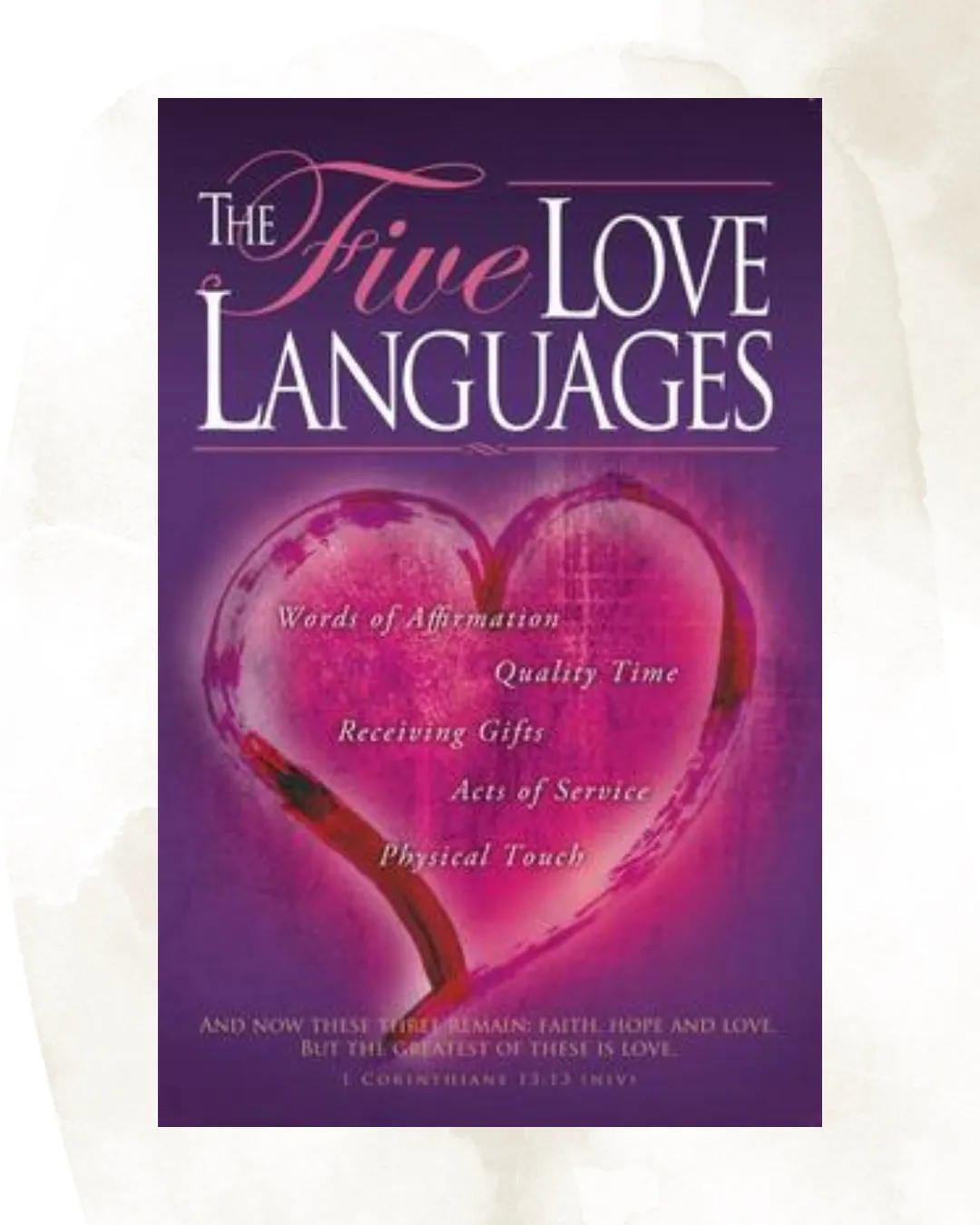
The Five Love Languages by Gary Chapman
This book did not so much find me as wait patiently for me.My husband brought The Five Love Languages years ago, and it sat quietly on the bookshelf gathering dust. I was not drawn to it, and for the longest time, I had no desire to read it. Then one day, I heard a podcast speaking about the five love languages, and something stirred. Later, I noticed the book again, pulled it from the shelf, and began reading. I remember thinking, "Why did I wait so long?"
This book changed the way I understand relationships. It offered a simple yet powerful truth that love is not one size that fits all. We each have different ways of expressing love and different ways of feeling loved.
Gary Chapman describes five love languages:
words of affirmation, where love is expressed through encouragement, appreciation, and kind words
acts of service, where care is shown through helpful actions and thoughtful support
receiving gifts, where love is symbolised through meaningful tokens and gestures
quality time, where undivided attention and shared presence matter most
physical touch, where affection is felt through touch, closeness, and warmth.
What I found so valuable is that these languages invite us to look beyond our own preferences and become more curious about the hearts of others. We may be speaking or representing love sincerely, but not necessarily in the language that another can understand.
I find understanding these love languages helps me listen more deeply, soften assumptions, and meet one another with greater compassion. It reminds me that love is not only about how I intend to share it, but also about how it is received. This understanding brings me more harmony, tenderness, and respect into all my relationships, with partners, children, friends, family, and even myself.
I am grateful to have learned that love is not just a feeling, it is also a practice of noticing, honouring, and learning how another soul feels seen, valued, and cherished.
I think at its heart, this book is about respect, awareness, and the willingness to love with greater intention.
Perhaps it will find you.
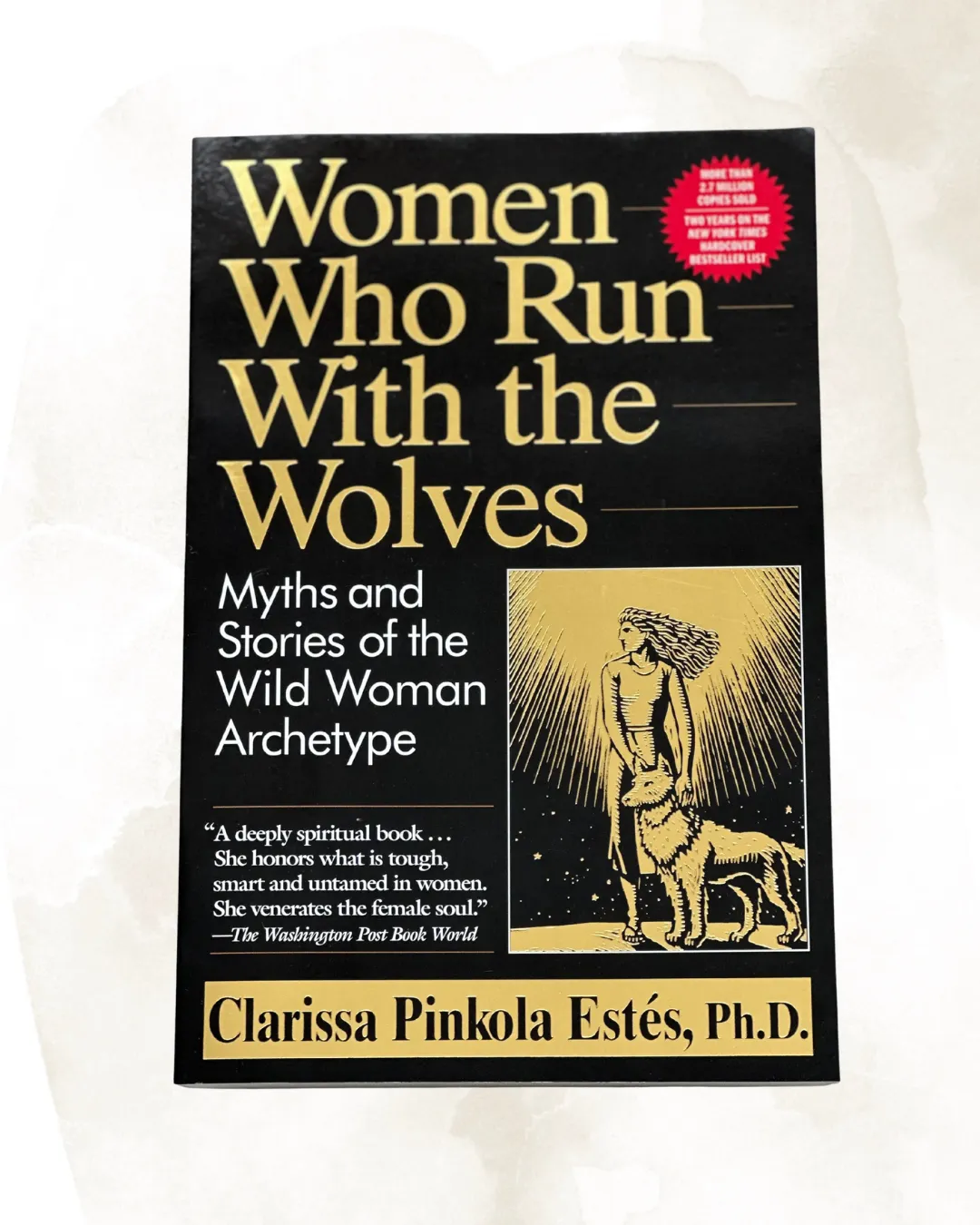
Women Who Run With the Wolves by Clarissa Pinkola Estés
Some books do not simply land in our hands. They awaken something ancient within us.
Women Who Run With the Wolves was one of those books for me. It did not feel like I was reading something new. It felt like a remembering. A return. A quiet yet powerful call back to the parts of myself that had always been there, waiting patiently beneath the noise of life.
Clarissa Pinkola Estés writes about the Wild Woman, the instinctual, intuitive, creative and soul-deep essence that lives within every woman. She is the part of us that knows. The part that senses truth before the mind catches up. The part that longs for meaning, freedom, expression, tenderness, belonging, and a life lived in alignment with what is real.
This book reminded me that so many women are not broken; we are often simply disconnected from our instinctual nature. We have been taught to be good, responsible, agreeable, productive, and to fit neatly into expectations, often at the cost of our own inner knowing. And yet beneath all of that, the wild and wise woman remains.
What I love most about this book is that it does not preach. It weaves story, myth, symbol and soul together in a way that slips past the mind and speaks directly to something deeper. It invites us to listen to our longings, our grief, our rage, our creativity, our exhaustion and our joy, as sacred messengers.
For me, this book was an invitation to come home to myself. To trust more deeply, honour the voice within, stop shrinking the parts of me that were never meant to be hidden and reclaim my intrinsic instincts.
Women Who Run With the Wolves is a book about remembering who we are beneath the conditioning. It is about reclaiming self-trust, voice, boundaries, passion, creativity and the sacred feminine wisdom that has always lived within us.
It is not a light read, but a profound one that asks us to meet ourselves honestly, tenderly, and courageously.
Perhaps it will find you, too.
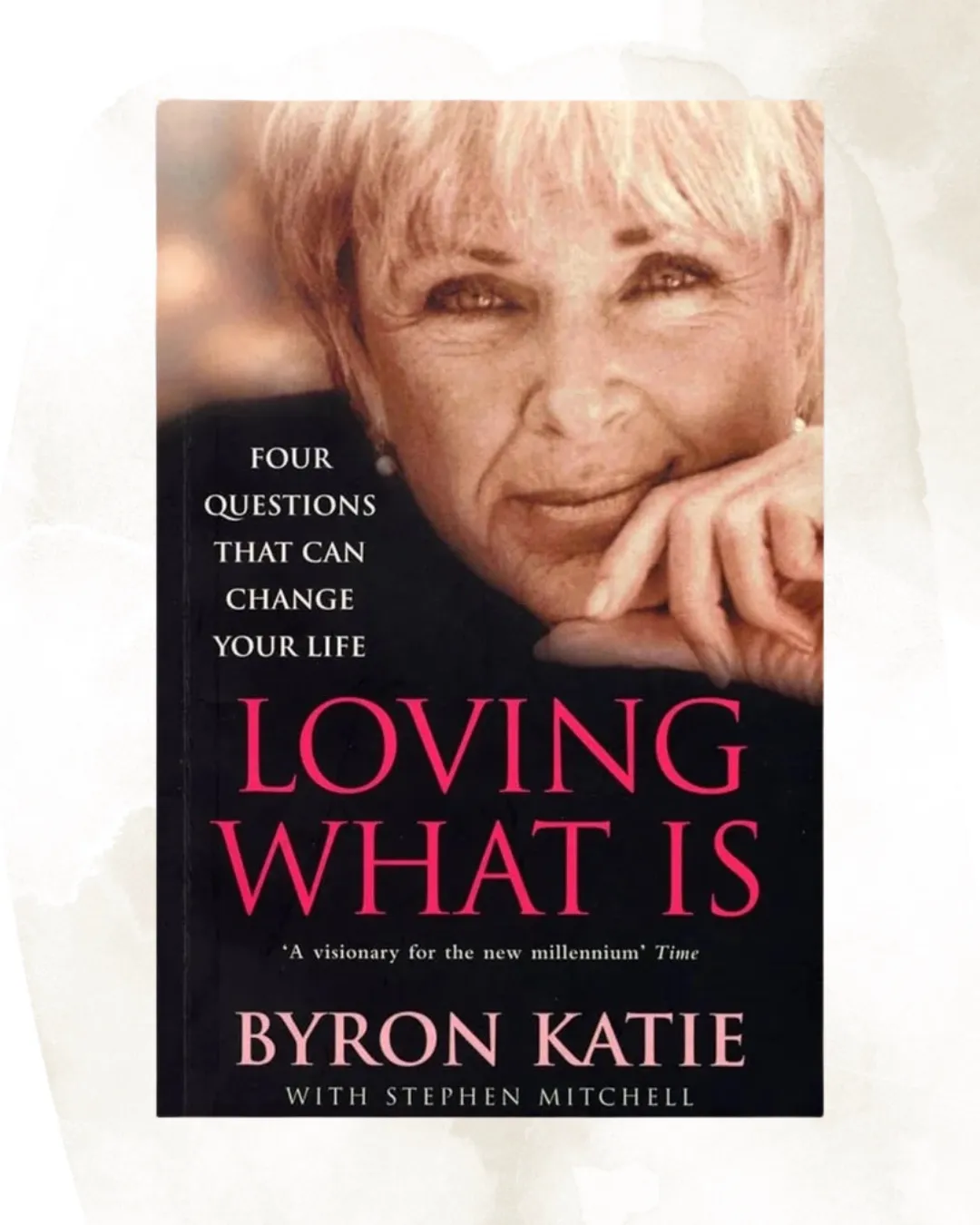
Loving What Is by Byron Katie
Loving What Is found me through one of my mentors, who was facilitating a Byron Katie workshop I attended. At the time, I did not fully realise that this simple yet profound process would change the way I meet my own mind.
Byron Katie’s work, known simply as The Work, is built around four questions. They are beautifully simple:
Is it true?
Can you absolutely know it’s true?
How do you react, what happens, when you believe that thought?
Who would you be without that thought?
These questions invite us to become curious and to gently loosen the grip of the stories that create suffering within us.
What makes these questions so powerful is their ability to restore clarity. Rather than trying to fix the world around us, they ask us to look within and examine the thoughts we have been believing without question. In that inquiry, we can question the thoughts that keep us in pain. It gave me a deeper sense of responsibility for my own inner world, greater awareness and authority to choose my thoughts consciously.
I discovered that freedom does not begin when life becomes easier. It begins when I am willing to meet my thoughts with honesty, compassion, and truth.
I have returned to Byron Katie’s teachings regularly as it guides me to stay on track.
This book found me, and perhaps it will find you.
When Things Fall Apart by Pema Chödrön
When Things Fall Apart found me in a season when the ground beneath me felt uncertain and in a time of endings, change, and quiet unravelling. Pema Chödrön’s words met me where I was. She invites us to sit right in the middle of our discomfort, to soften instead of brace, and to find courage in the tenderness of being human.
This book taught me that falling apart is not something to be ashamed of; instead, it’s part of an awakening. II learnt that when I stop running from my pain, I begin to find ease and compassion for myself and others. Her wisdom offered me a kind perspective that leads to inner peace and freedom that I had not really known before.
This book reminded me that everything, even the painful parts, belongs.
Perhaps it will find you, too.
The Untethered Soul by Michael A. Singer
The Untethered Soul found me at a time when I was ready to dive deeper and move beyond my known concepts, beyond self-improvement, into the essence of awareness itself. Michael Singer’s words are both simple and profound, guiding us to witness the mind's constant chatter rather than be swept away by it. He reminds us that freedom comes not from controlling life, but from learning to let go and unhooking from your ego.
We are reminded that we are not our thoughts or our emotions; we are the awareness of them, and we have the power to allow these experiences to pass by without reaction. Therefore, not trigger stress or suffering.
There was so much in this book that I had to take notes to remember the key points and to anchor the experience. Each chapter felt like a quiet doorway into a new level of understanding. It wasn’t a quick read because after each paragraph, I took a moment to integrate and understand what I had read.
This book gave me a framework for inner freedom; it taught me that peace is about learning to observe, release, and be open.
Perhaps it will find you, too.
The Four Agreements by Don Miguel Ruiz
The Four Agreements found me when I was seeking a simpler, clearer way to live, something practical that still carried spiritual depth. Don Miguel Ruiz distils ancient Toltec wisdom into a code of conduct with four life-changing principles:
Be impeccable with your word.
Don’t take anything personally.
Don’t make assumptions.
Always do your best.
The Four Agreements has not only transformed my personal life, but also the culture of my practice. Its lessons serve as a practical guide to interacting with others in ways that foster peace and acceptance. By taking the time to consider how each of these agreements can be applied to your life, you can enhance communication, build trust, improve collaboration, and increase fulfilment.
The first agreement, 'be impeccable with your word,' is my favourite. It has become a beacon for me, an entrenched value that continues to guide my life and work. It’s a reminder of the power of language and the energy behind what we speak, think, and believe.
This book showed me how much peace can be found when we take responsibility for our words, stay in our own business, and let go of assumptions and show the world who we really are. It taught me that truth spoken with kindness heals.
It remains one of those rare books that you don’t just read once — you live it, again and again.
Perhaps it will find you, too.
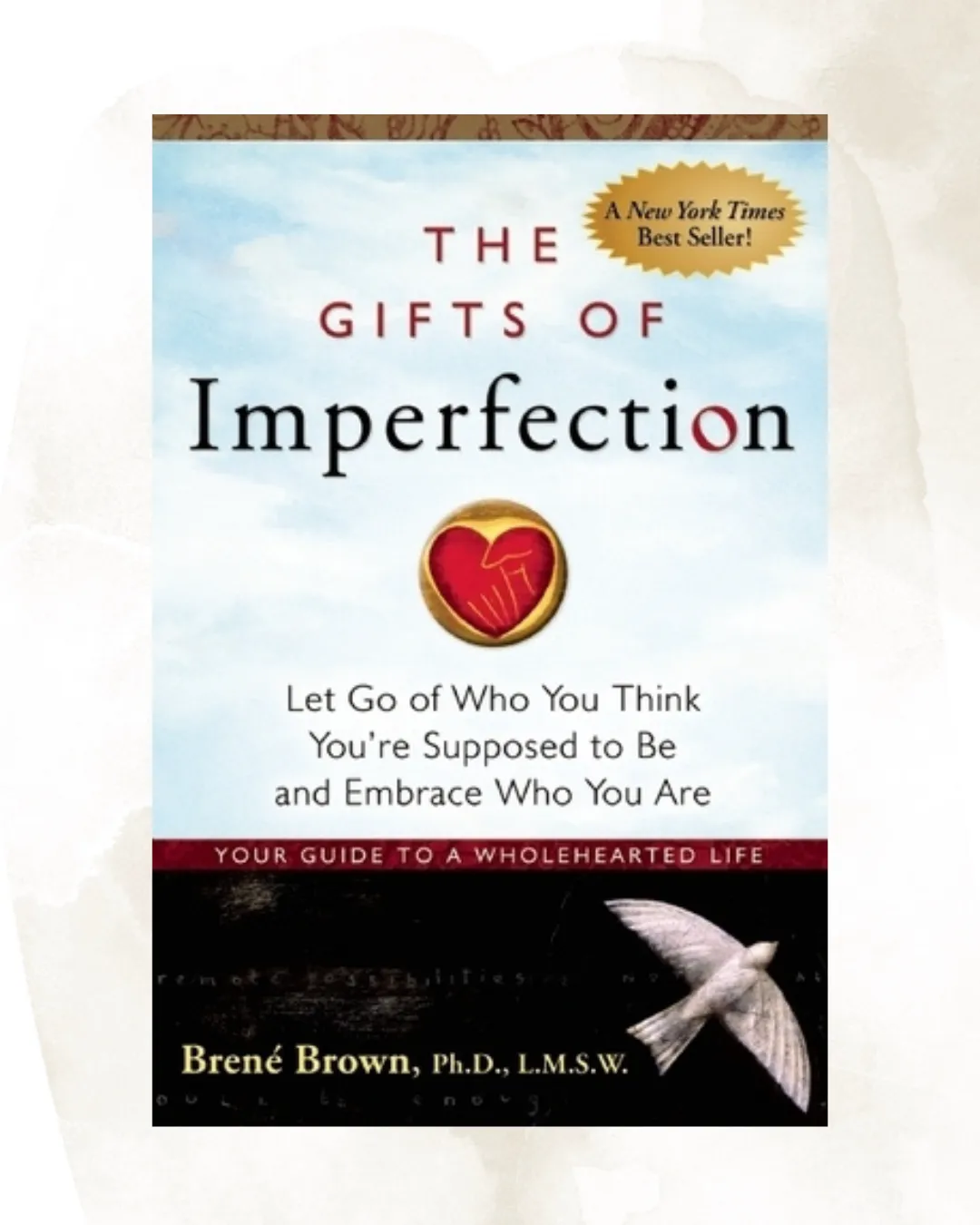
The Gifts of Imperfection by Brené Brown
I didn’t expect this book to reach so deeply into my heart. The Gifts of Imperfection arrived like a quiet challenge, to stop performing, stop pleasing, and start living with genuine self-acceptance. Brené Brown’s work opened the doorway to wholehearted living, showing that courage, compassion, and connection are born from the willingness to be seen, flaws and all.
What struck me most was her reminder that perfection is the enemy of authenticity. This book helped me recognise the subtle ways I armour myself against vulnerability, when I falsely believe it keeps me safe, when it really keeps me small.
This book encouraged me to soften, to meet myself with compassion, and to celebrate the raw, real, and beautifully human parts of myself and others.
I’m reminded that being imperfect is the beginning of being whole and complete.
Perhaps it will find you, too.
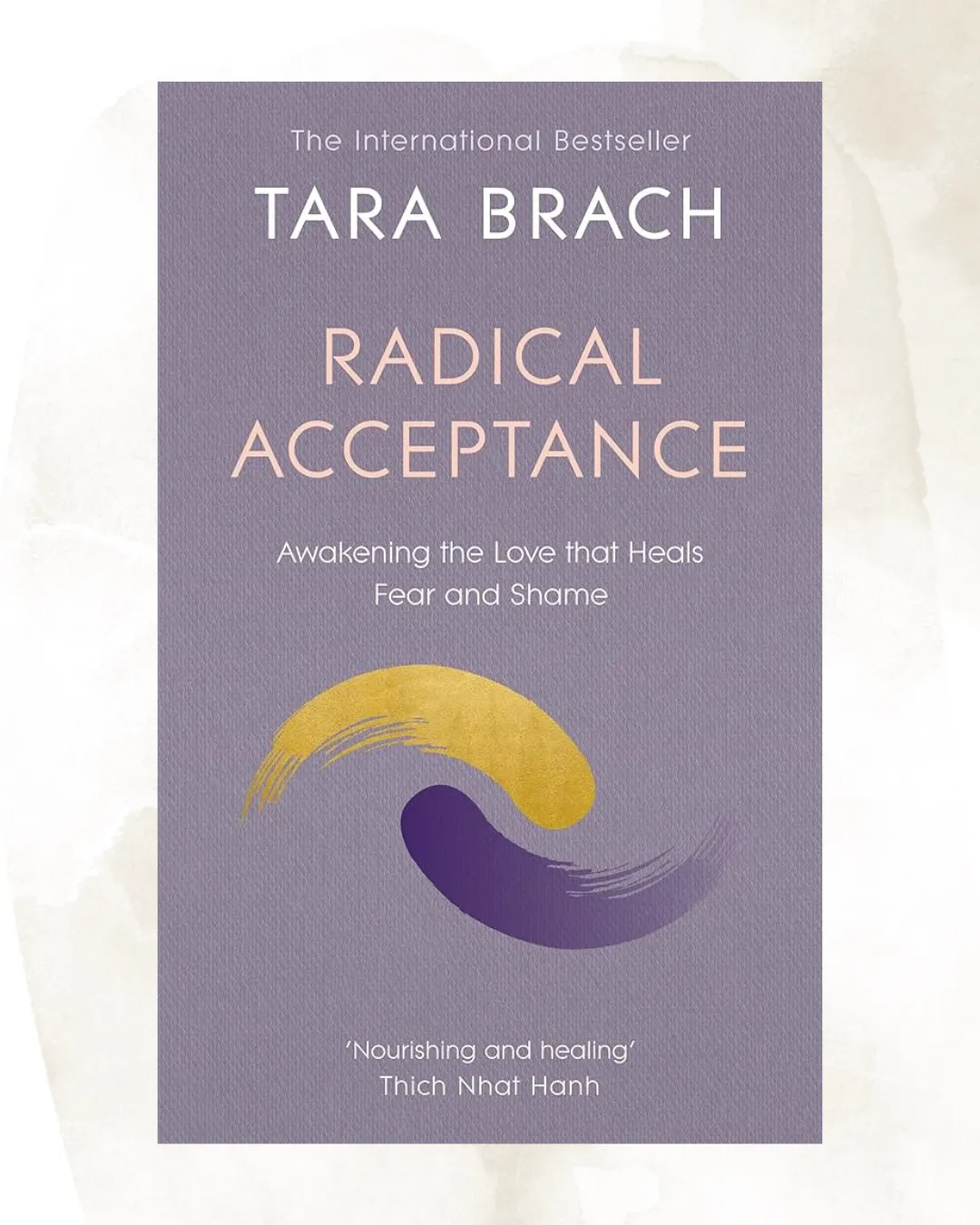
Radical Acceptance by Tara Brach
There are moments in life when self-criticism becomes so familiar that it feels like truth. Radical Acceptance entered my world during one of those times. Tara Brach’s words met me with compassion I didn’t yet know how to give myself. She writes of the trance of unworthiness, that quiet, relentless feeling of not being enough, and she offers a path home through mindfulness and love.
This book didn’t just teach me about acceptance; it showed me what it feels like. It invited me to pause, breathe, and whisper the simple words, “This too belongs.” It softened the sharp edges of judgment and opened a space for tenderness where resistance once lived.
Reading Radical Acceptance reminded me that the healing we seek isn’t found by changing who we are, but by learning to embrace all that we already are.
Perhaps it will find you, too
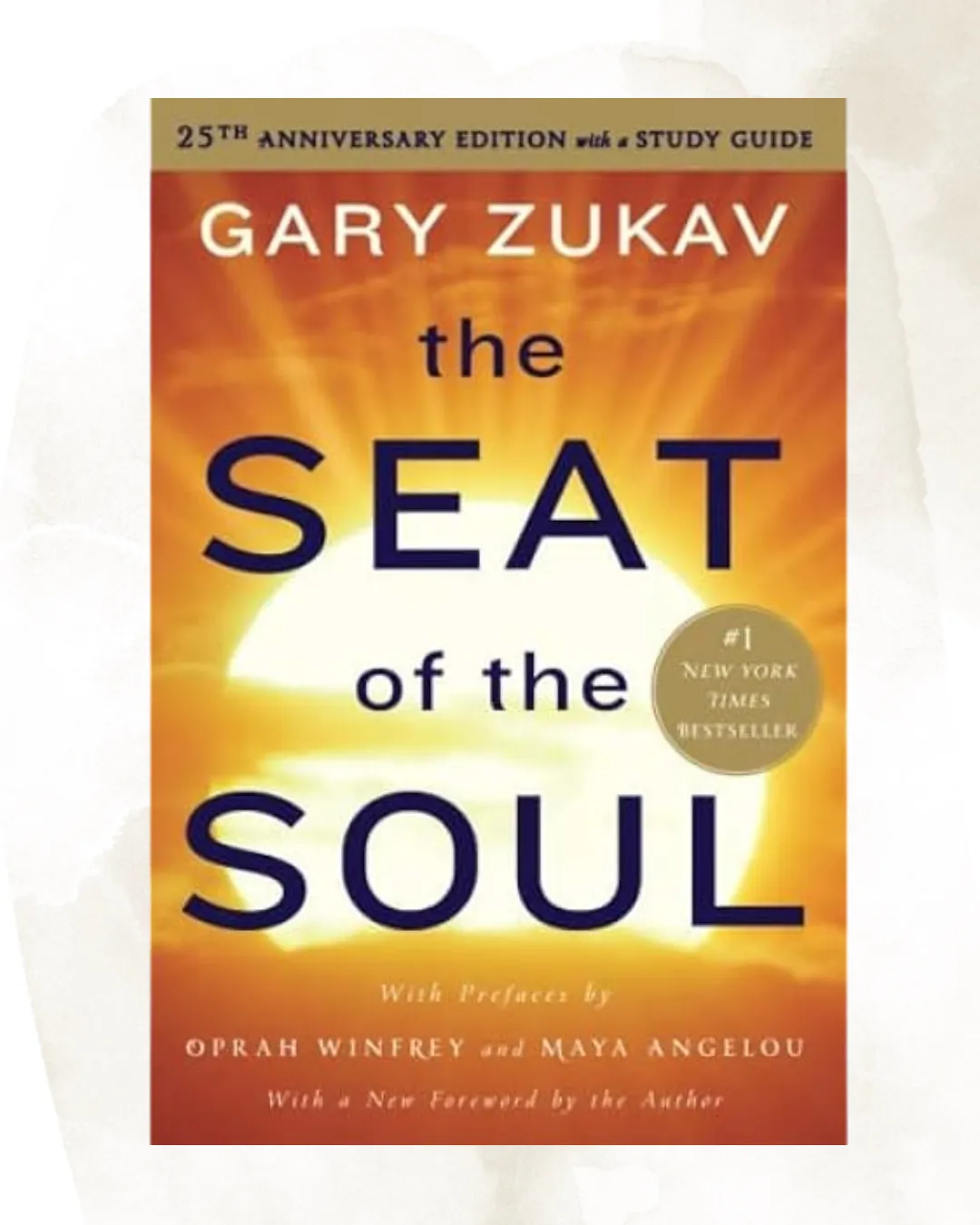
The Seat of the Soul by Gary Zukav
I remember reading The Seat of the Soul and feeling as though someone had quietly put words to truths I had always sensed but could never fully explain. Gary Zukav’s writing opened a fresh way of understanding life, one in which purpose, energy, and choice are all threads in the soul’s unfolding journey.
This book introduced me to the idea of authentic power, the kind of power that does not come from control, status or external achievement, but from the alignment between our personality and our soul. That idea stayed with me. It invited me to look beyond the surface of success and ask a deeper question: Am I living in a way that is true to who I really am?
As I read, I began to see that every experience, every relationship and every challenge offers us an opportunity to grow in awareness. Zukav writes about intention, emotional awareness and spiritual responsibility in a way that gently but firmly calls us back to ourselves. He reminds us that life is not random; instead, it is constantly inviting us into greater consciousness.
What I found especially meaningful was his exploration of choice. That in each moment, we are choosing, through fear or through love, through reaction or through awareness, through the wounded self or the soul-led self. It made me realise that true transformation is not found in dramatic outer change alone, but in the quiet inner choices we make again and again.
This book helped me take responsibility for the energy I bring into the world and to recognise that how I choose to live matters, and it continues to remind me that the soul is always calling me towards greater integrity, presence and alignment.
Perhaps it will find you, too.
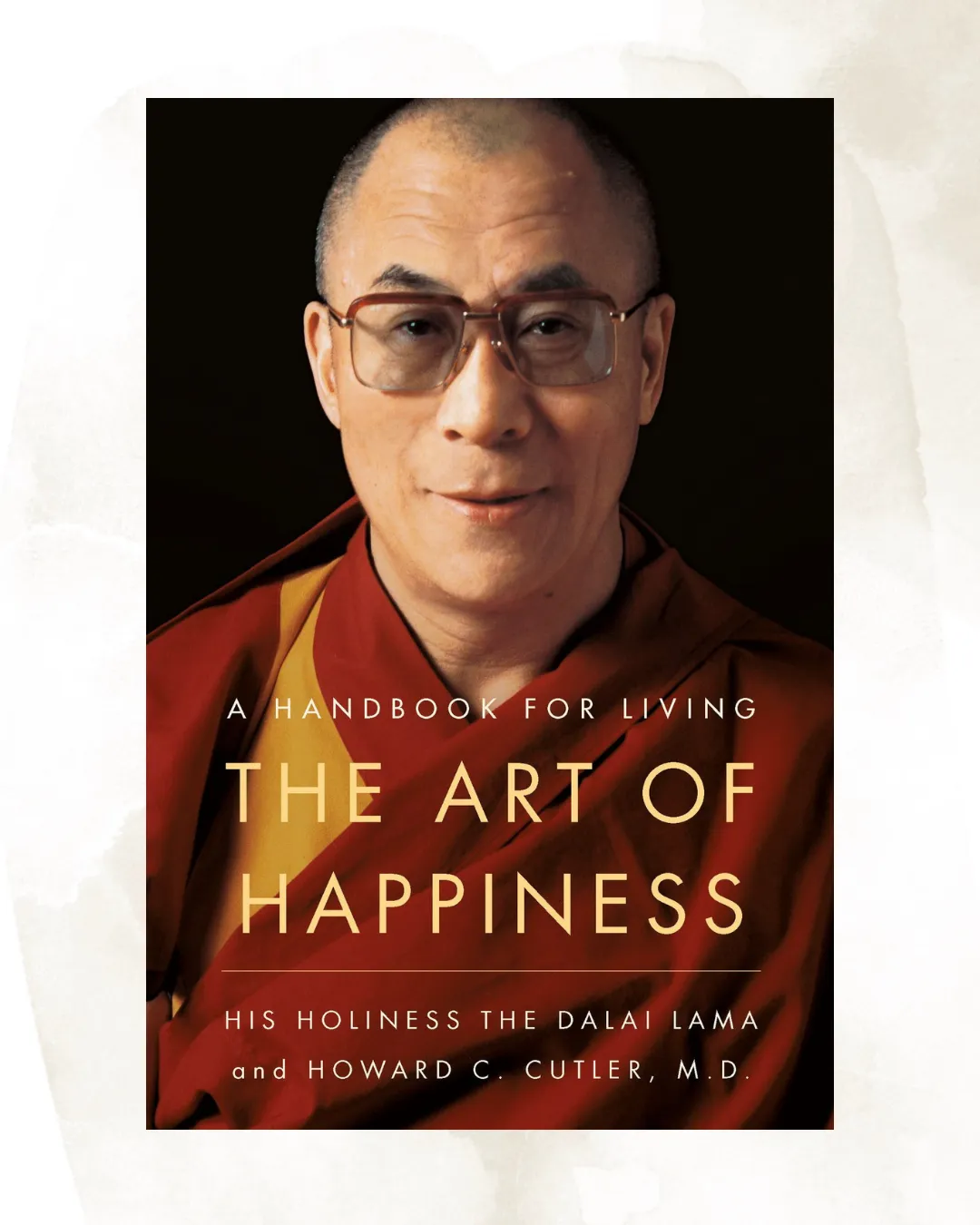
The Art of Happiness by His Holiness the Dalai Lama
I was drawn to The Art of Happiness not because I was searching for answers, but because I was longing for a sense of calm. I purchased this book after visiting Dharamsala, where His Holiness the Dalai Lama resides, and it felt as though it carried something of that place within it — a quiet presence, a simplicity, and a deep invitation to return to what truly matters.
This is a book about compassion, about understanding suffering, and finding peace in the ordinariness of everyday life. It does not offer happiness as something distant or grand. Instead, it gently brings us back to the truth that happiness is cultivated through how we live, how we think, and how we relate to ourselves and others.
What stayed with me most was the simplicity of his message: that happiness grows through kindness, kindness towards ourselves, towards others, and towards life as it is. I found this thought profoundly comforting in a world that so often encourages striving, achieving and endlessly seeking more. This book reminds me that peace is found in the soft strength of a generous heart.
I also loved the way spiritual wisdom is woven with such practical humanity. I am reminded that suffering is part of the human experience, but so too is our capacity to meet it with patience, tenderness and understanding, and both together form happiness.
This book helped me see that happiness is not a destination waiting somewhere in the future. It is a way of being, a daily practice, a continuous choice to return, again and again, to presence, gratitude, compassion and love.
Each time I return, slow down, and trust, even in the smallest moments, a cup of tea, a kind word, a quiet breath, a loving gesture, becomes a pathway back to peace.
Perhaps it will find you, too.
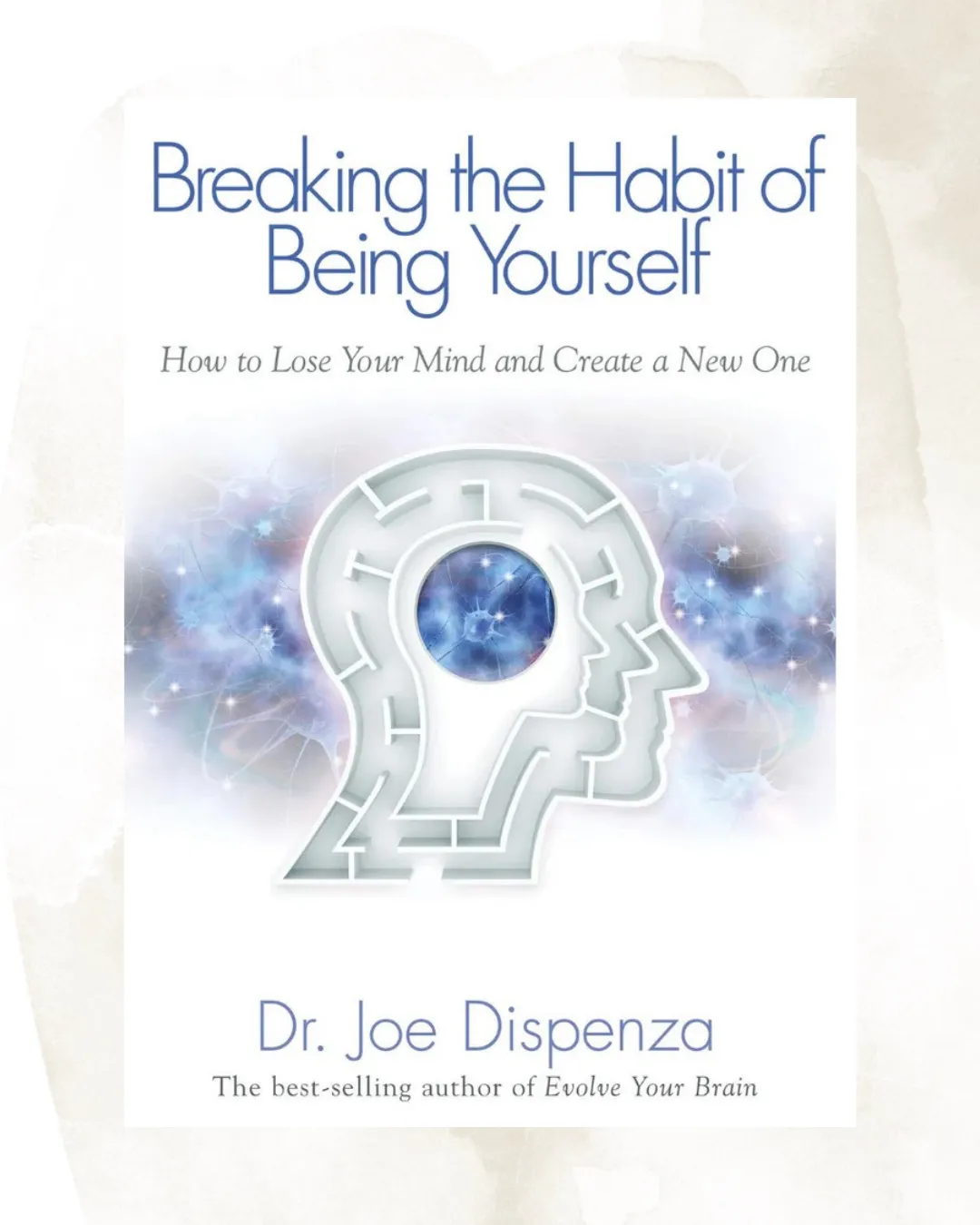
Breaking the Habit of Being Yourself by Dr Joe Dispenza
I did not just read this book — I worked with it.
Breaking the Habit of Being Yourself found me at a time when I was deeply curious about the bridge between science and spirituality, and Joe Dispenza spoke into that space in a way that felt both illuminating and empowering. He brings together neuroscience, mindfulness, meditation and energy in language that made sense to both my logical mind and my intuitive heart.
What drew me in so deeply was the way he explains that so much of who we are is shaped by familiar thoughts, emotional patterns and unconscious habits. He explains how we can live from the same inner programmes for years, repeating the same responses, beliefs, and limitations, without even realising how much they shape our lives. His work highlights that change begins the moment we become conscious of what has been unconscious.
Through this book, I began to understand more clearly how our inner world influences the life we create and that if we want a new future, we cannot keep thinking, feeling and behaving from the same identity that created the past. Instead, we are asked to step beyond old stories, old emotions, and old ways of being and begin rehearsing a new self with intention.
I especially loved that this was not offering included practice, awareness, and understanding that transformation is not something we wish for, but something we embody as we become more awake, deliberate, and aligned with who we truly want to be.
I had long sensed that transformation begins within, and that the mind can be trained to stop living as an effect of our past and begin choosing consciously from the present.
Each time I return to this book, I feel reawakened to possibility and the awareness that I can create a truer, more expanded version of myself.
I didn’t just read this book, I worked with it.
Perhaps it will find you, too.
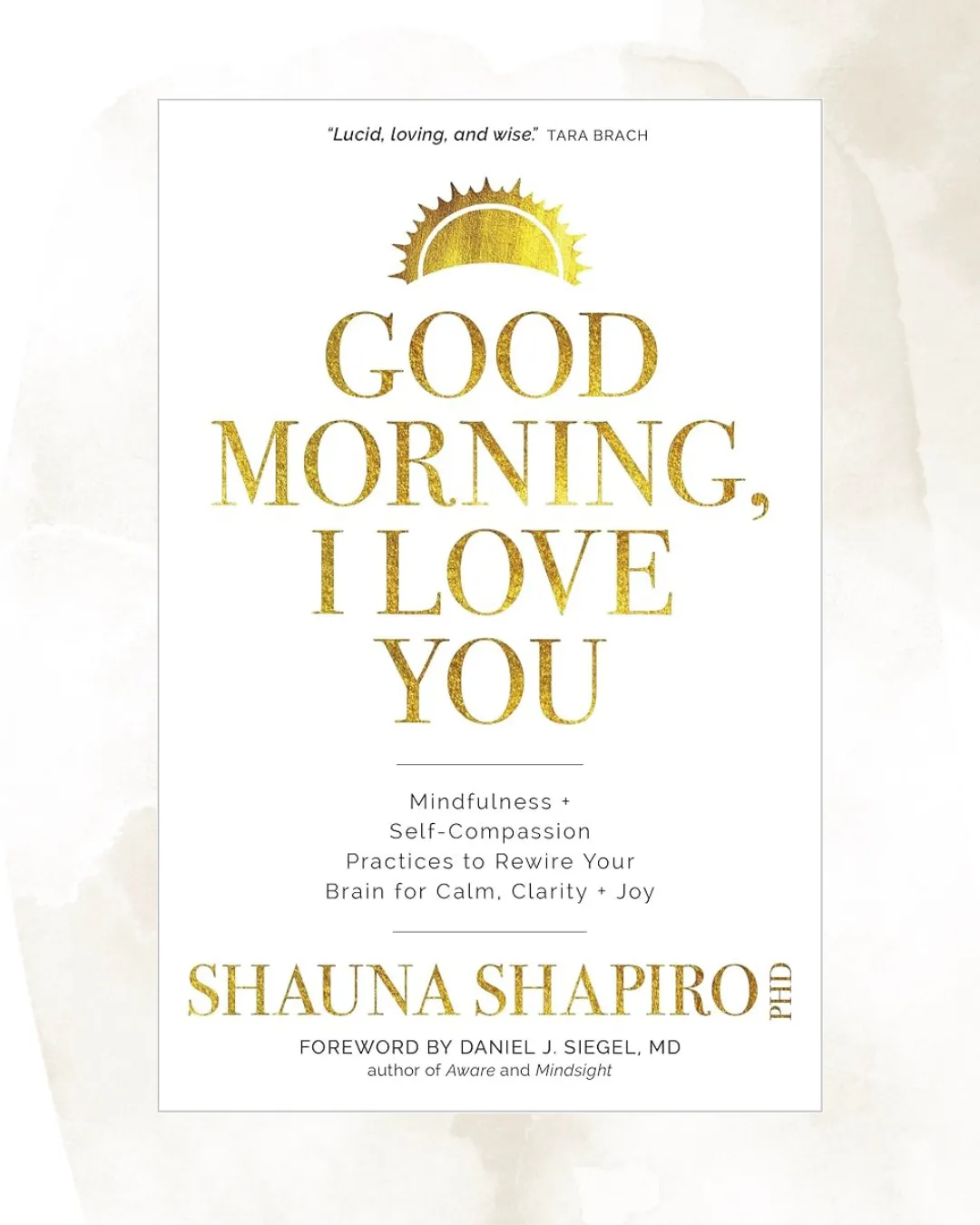
Good Morning, I Love You by Dr Shauna Shapiro
Some books do not arrive with thunder. They arrive like a whisper, gentle, steady, and exactly what the heart needs.
Good Morning, I Love You came into my life as one of those quiet companions. From the first pages, I felt the warmth of Dr Shauna Shapiro’s voice, wise, compassionate, and deeply human.
At its heart, this book is about mindfulness in the everyday moments of being human, like when we feel overwhelmed, self-critical, rushed, or not enough. It reminds us that awareness, when joined with kindness, can become a powerful force for healing.
One of the phrases that stayed with me is, “What you practice grows stronger.” Such a simple truth, and yet so profound, it encouraged me to reflect on what I was practising each day and to question whether I was strengthening self-judgement, impatience, and old patterns, or strengthening compassion, presence, and a gentler way of being with myself?
That is the gift of this book. It helped me see that mindfulness is not just a technique to use when life feels difficult; instead, it is a relationship with self. A way to meet my thoughts, emotions, and experiences with curiosity rather than criticism, with tenderness instead of harshness. And there is something quietly revolutionary about that fact when we live in a world that often tells us to do more, fix more, achieve more, and push harder.
My big takeaway is that I now consciously start my day with kindness and a choice about how I want to show up, so I can greet the day with an open heart and a little more grace.
For me, Good Morning, I Love You is a reminder that transformation does not always begin with dramatic change. Sometimes it begins with a breath, a gentle pause, a kinder thought and a softer way of holding self in the midst of ordinary and extraordinary life.
A beautiful book, and a healing one.
Perhaps it will find you, too.
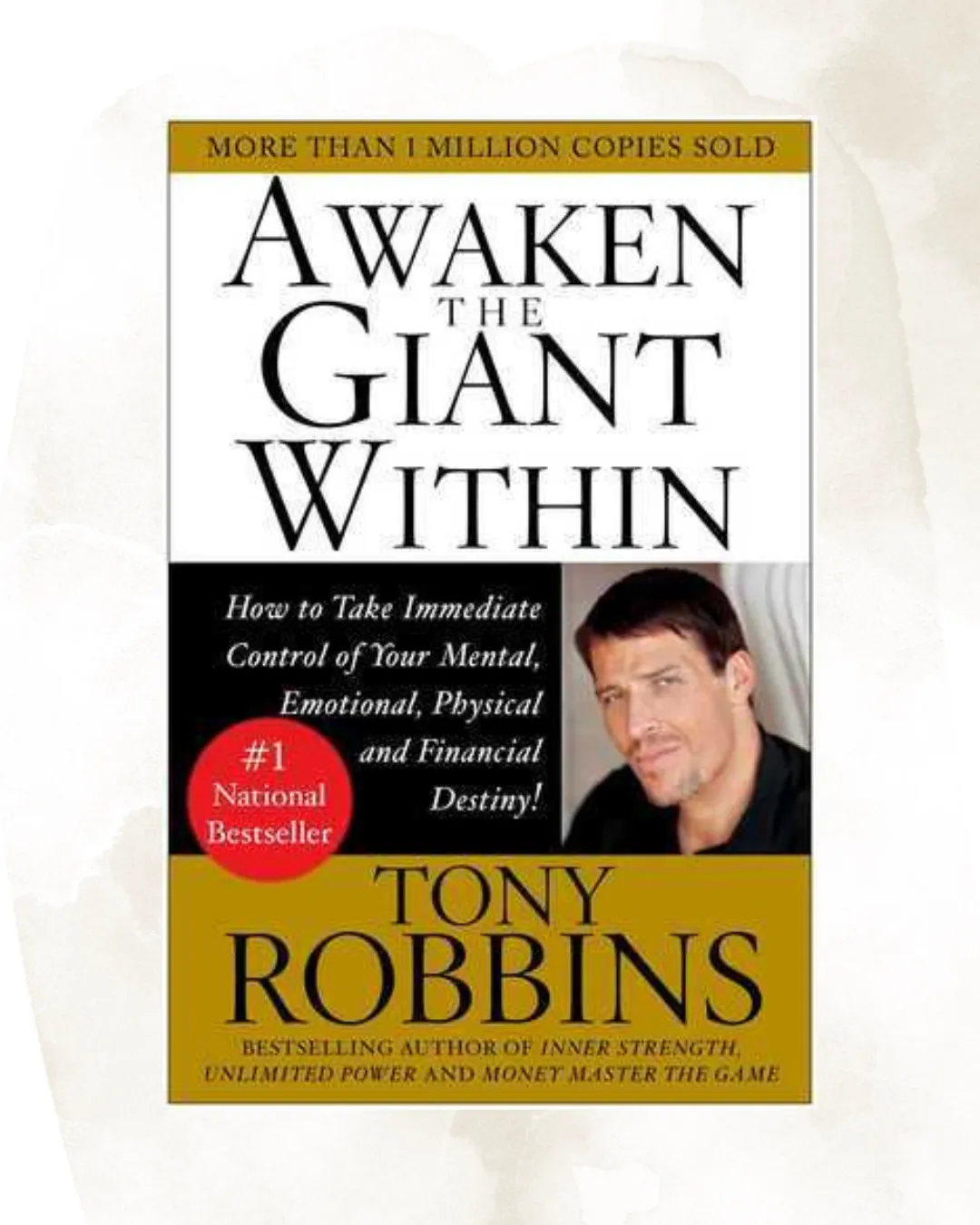
Awakening the Giant Within by Tony Robbins
There is something fitting about ending the year with a book that stirs the fire within.
Awakening the Giant Within came to me at a time when I was questioning my direction and wanting to reconnect with a stronger sense of possibility. Tony Robbins writes with a bold, unmistakable energy that does not let you stay asleep for long. His words felt like a call to action.
What I appreciate about this book is its strong sense of personal responsibility. It does not dwell for long in theory. It moves quickly into action, inviting us to look honestly at the patterns, decisions and beliefs that have been steering our lives, often without our conscious awareness. It reminds us that change is not reserved for some distant future moment. It begins now, with the next choice, the next thought, the next decision to move in a different direction.
This book encouraged me to pay closer attention to the relationship between my emotional state, my language and my energy. It helped me see how easily I can become shaped by habit, and how powerful it is when I choose instead to live more deliberately.
I also loved its practicality. Tony Robbins has a way of taking big ideas about transformation and bringing them down into daily life. He asks us to become active participants in our own becoming, to stop waiting for confidence, clarity or ideal circumstances, and to begin with what is already in our hands.
For me, this book made the point that inner strength is not something we either have or do not have. It is something we can access, strengthen and lead from. It invited me to finish the year not by drifting into the next one, but by stepping forward with courage, intention and a renewed commitment to the life I want to create.
Awakening the Giant Within carries a strong pulse of possibility. It reminds us that even when life feels uncertain, there is still power in how we choose, how we think, how we speak and how we act.
A powerful book and one that leaves you feeling more awake to your own capacity.
Perhaps it will find you, too.
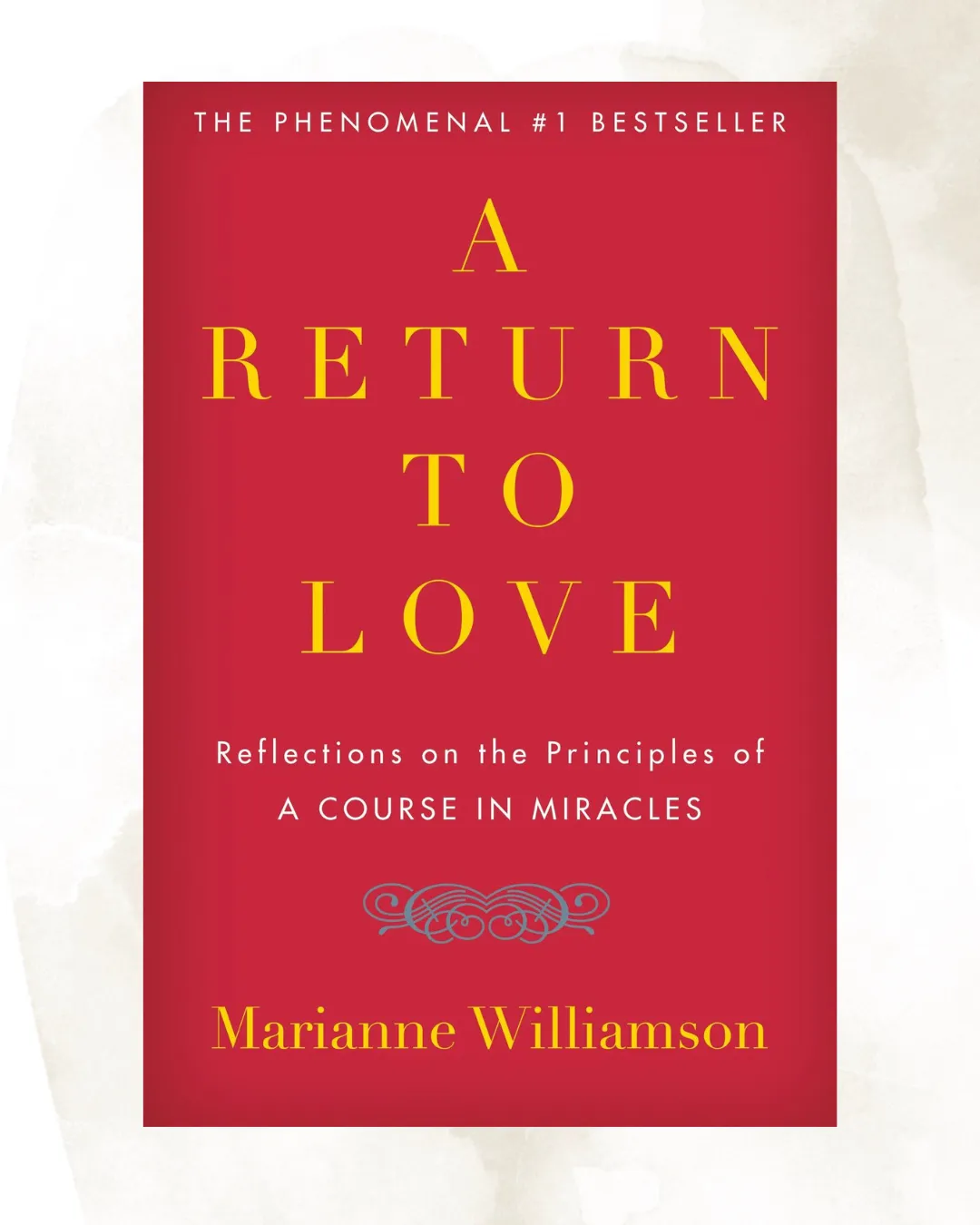
A Return to Love by Marianne Williamson
This is a beautiful book to begin again with.
Marianne Williamson’s words carry both softness and strength, yet they do not push or persuade. They call us back to something essential, the truth that love, not fear, is our natural state. Reading this book felt like exhaling after holding my breath for too long. It brought with it a sense of remembering, what I already knew deep that was waiting to hear it spoken aloud.
What moved me most was the way this book reframed growth and healing. It offered a gentler truth: healing is often a return to love, trust and to the part of us that is whole. There is something deeply comforting in that message, for often we enter a new season with pressure to improve, achieve, or reinvent ourselves. But here the call is to remember who we already are and let love lead.
For me, it felt like a spiritual reset. A reminder that every thought, every choice, every interaction can either come from love or from fear, and we can gently shift the way we meet ourselves and others, and the way we move through the world.
What I also love about this book is that its wisdom feels both expansive and deeply personal. It speaks to my soul, lands in the practical moments of everyday life, in forgiveness and compassion, in choosing peace over judgment, and in opening the heart when it would be easier to close it.
This book is like setting an intention that love is the deepest truth of who we are.
A Return to Love is a beautiful companion.
Perhaps it will find you, too.


